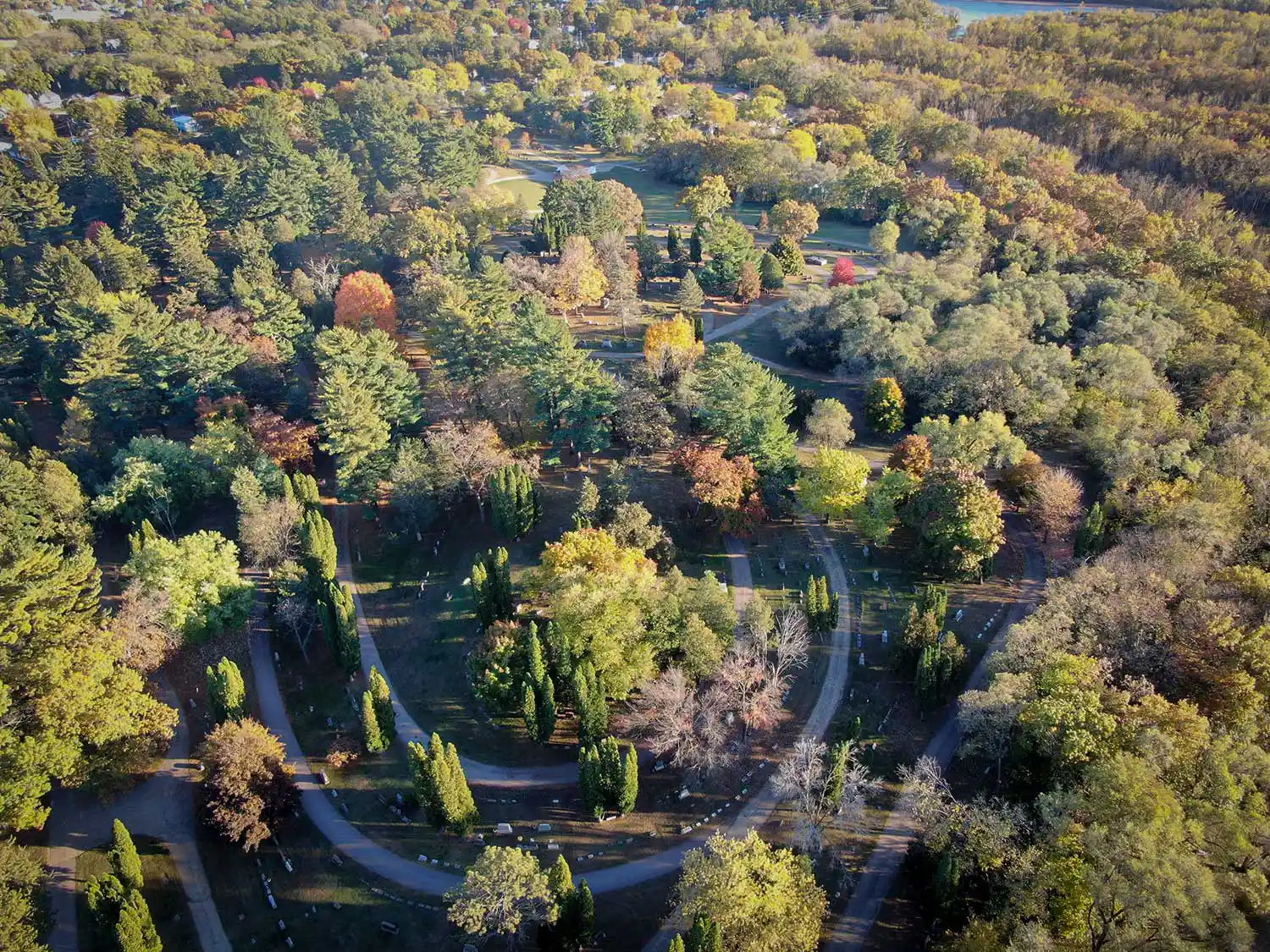
About Silver Lake Cemetery in Portage, WI
Silver Lake Cemetery is Portage’s oldest and most historic resting place. Established in the mid-nineteenth century, the cemetery has served the Portage community for generations, providing a permanent place of rest for the city’s founders, civic leaders, veterans, and families.
The cemetery is governed by the Silver Lake Cemetery Association, a nonprofit organization whose board of trustees are dedicated to preserving and maintaining these historic grounds. Our sexton, Scott Schroeder, is available to assist families with burial arrangements and niche purchases.
Our Mission
Preserving history and honoring the legacies of those who came before us is at the heart of everything we do. We are committed to offering options for a dignified final resting place, ensuring that every life is remembered with the respect it deserves. Our mission is to provide families with lasting peace of mind, knowing their loved ones will be honored for generations to come.
Our Vision
Our vision is to preserve a timeless sanctuary and furthering the 170+ year legacy for future generations. As society evolves, we are devoted to expanding resting options that honor family legacies. Through dedicated stewardship we strive to maintain a cemetery our community can be proud of.
Board Members
James Grothman
James Grothman was born and raised in Portage and began Grothman & Associates Land Surveying in 1988. I have since retired after running a success surveying, engineering and development company. He has lived in Portage his entire life and is a community minded person. He strives to improve our community in any way that can better it. He has been a member of the Silver Lake Cemetery for over 20 years and became president in 2012. He enjoys helping with the cemetery’s improvement and making it a better final resting place for family members and loved ones. One of the cemetery association’s most recent accomplishments is our columbarium built in 2025.
David Gunderson
Dave is a fourth generation Portage native and has served on the SLCA Board since 2012. He retired from Gunderson Construction Co. in 2013 after 38 years as a structural engineer and building general contractor serving the Portage area. He holds a BS degree from the UW-Madison in Civil Engineering. He is married to his Portage High School. Together they enjoy spending time with their only daughter, her husband, and their five grandchildren who keep them entertained and on the go!
Scott Schroeder
David Bain
Lynn Van Epps
Lynn was born and raised in Portage near Silver Lake Cemetery and attended Portage public schools through high school. He graduated from the UW - Stout in 1973 with a degree in Industrial Engineering. He is a long-time member of the Portage Elks Lodge and Past Exalted Ruler. He has been a resident of the area for the past 48 years and was an officer of Freeland Industries, Inc and Freeland Trucking for 45 years. He joined the board of Silver Lake Cemetery in August 2025 and wants to continue to keep the history and legacy of the cemetery going forward.
Travis Hamele
Travis is lifelong resident of the Portage area and a local business owner with deep roots in the community. Through his work and community involvement, he is committed to helping make Portage a great place to live, work, and play. Travis believes in preserving the area's history and traditions while supporting efforts that strengthen the community for future generations. He is honored to serve on the Silver Lake Cemetery Board and contribute to the stewardship and care of this important local landmark.
William Kutzke
Notable Community Members
Silver Lake Cemetery is home to the graves of remarkable individuals whose lives left a lasting mark on Portage, Wisconsin, and the wider world. Below are brief histories drawn from historical newspaper accounts and records.
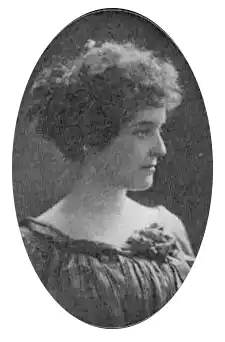
Zona Gale
Zona Gale was born on August 26, 1874, in Portage, Wisconsin, to Charles Franklin and Eliza Beers Gale. She became the first woman to win the Pulitzer Prize for Drama, receiving the award in 1921 for her play Miss Lulu Bett. An American novelist, short story writer, and playwright, Gale published her works under her maiden name throughout her career. Her books, rooted in her hometown of Portage, were noted for their intimate realism and their depiction of small-town Midwestern life. She died on December 27, 1938, in Chicago, Illinois, at the age of 64. She is buried at Silver Lake Cemetery.
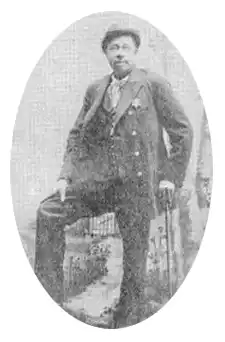
Ansel Clarke
Ansel Clark was on a Mississippi slave plantation. He came north to Wisconsin in the course of the Civil War, eventually settling in Portage, where he lived for approximately seventy years.
Clark became a well-known and respected citizen of Portage, known to everyone in the city, according to the Portage Register-Democrat at the time of his death on April 18, 1932.
He was also served as a constable and as a member of the National Guard in Portage, receiving full military honors. Portage’s noted authoress, Zona Gale Breese, who had known him since her earliest recollection, wrote the tribute appended to his memory.
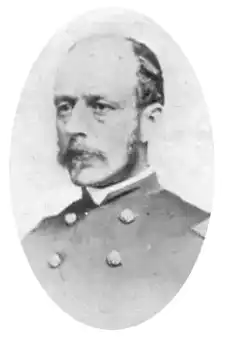
Colonel Frank Haskell
Colonel Frank A. Haskell achieved national recognition for his eyewitness account of the Battle of Gettysburg, that was published in many news outlets and included in the Harvard Classics collection. He served as adjutant with the 6th Wisconsin Volunteer Infantry, credited with helping develop the regiment into a disciplined fighting force.
Although Haskell never lived in Portage himself, his body was brought here for burial at Silver Lake Cemetery after he was killed by a Confederate sharpshooter at the Battle of Cold Harbor on June 3, 1864. His brother, Harrison Haskell, was Portage’s postmaster and maintained his residence in the city. A monument was erected over Colonel Haskell’s grave.
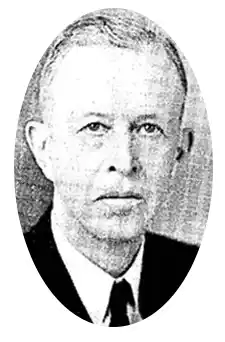
Harry A. Gunderson
Henry A. Gunderson was born on June 20, 1878, near Rio, Wisconsin. He was a graduate of the University of Wisconsin and Columbia University in Washington, D.C., and practiced law in Portage for more than 30 years.
He served as former lieutenant governor of Wisconsin and was closely associated with the Progressive Party, with whom state and national leaders paid tribute at his death. He died of a heart attack at his home in Portage on October 7, 1940. Services were held at the First Presbyterian Church, and burial was at Silver Lake Cemetery.
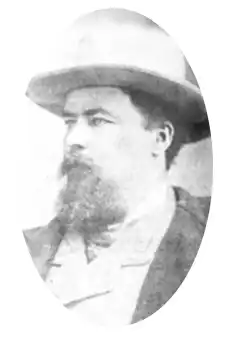
Samuel Stotzer
Samuel Stotzer was born in Berne, Switzerland on June 8, 1851. He emigrated to the United States with his family as a young man and learned the trade of stone cutting in Chicago. He came to Portage in 1876, where he opened the Montello Granite Quarry and later became the owner of the Stotzer Granite Works, originally located at the corner of West Wisconsin and West Conant Streets.
In Europe, Stotzer had trained under able sculptors and was well-known for his work on public buildings, including the repair of ornamental designing at the main entrance of the magnificent cathedral at Cologne, and carving on the altar in the cathedral at Berlin.
In Portage, his tombstones and monuments were carved for cemeteries including the Catholic, Oak Grove, and Silver Lake cemeteries.
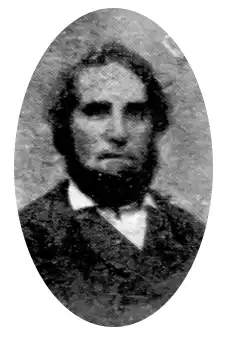
Stephen Turner
Stephen Turner was born in Virginia and arrived in Portage in 1858. He is considered to have been perhaps the first Black person to legally cast a vote in the United States, doing so in November 1880 in Portage under the newly-ratified Fifteenth Amendment. A legal challenge to his vote was taken to the Wisconsin Supreme Court, which unanimously upheld the proposition that his vote had been properly cast.
Turner was well-known and respected in the community. He was connected to the family of the well-known Ansel Clark, and was recognized as an under-sheriff and truant officer for the city. He was also an enthusiastic sportsman and an ardent fisherman. Stephen Turner died on June 29, 1907, in Portage, and is buried in Silver Lake Cemetery.
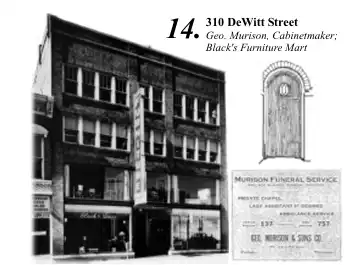
George Murison, Sr.
A young Scottish cabinet maker named George Murison arrived in Portage and established the business that would become Geo. Murison & Sons Co., described as one of the leading Wisconsin furniture firms. Murison arrived in America from Montrose, Scotland, where he had learned the cabinet-making trade. He came to Portage, then a rough town with a new canal and a population of about 2,000, and started his furniture store.
Through careful running of the business across many lines, the firm became known throughout the area for distinctive furniture and home furnishings. The company was operated by his two sons, Wallace Murison and George A. Murison, at the time of the firm’s 85th anniversary in 1938.
Richard Freeman Veeder
Richard Freeman was born in Montreal in 1812 and moved to Portage in 1837 with his family. It is one of the oldest historical names associated with the area.
He established the Veeder House tavern, which served as an inn and welcome house for travelers. Though the tavern was thought to have excessive prices, it became known for excellent food and was described as a frequent meeting place for men and farmers from the area.
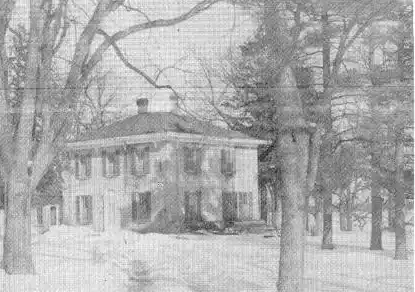
Conrad Collipp house on Silver Lake Dr., built 1858
Conrad Collipp
Conrad Collipp was born on February 21, 1822, near Elmshorn, Germany. He emigrated to America in 1848, traveling on foot from Milwaukee to the Portage area, where he discovered that the local clay was excellent material for making brick. He settled on the north shore of Silver Lake, cleared the land, built a log cabin, and laid claim to 160 acres by cutting his name on the trees.
The brickyards Collipp established became a thriving local business. He married Louisa Slifke, and together they had 11 children. The road now known as Silver Lake Drive was once called Collipp Avenue in recognition of his family’s early presence along that shore.